Commercial Interior Demolition Spring Hill
Selective demolition and interior tear-out inquiries for commercial renovations, tenant improvements, office reconfiguration, and retail space transitions. We remove nonstructural partitions, ceilings, flooring, fixtures, and finishes — coordinated with the building's operations, utility disconnections, and permit requirements. We don't claim engineering, licensed utility work, asbestos abatement, or fire system modifications without verified qualifications. Share the property, the scope, and the access so the right demolition plan can be reviewed.
Request a Quick Estimate
Tell us the basics — we'll review the scope and reply about availability.
Commercial Interior Demolition in Spring Hill
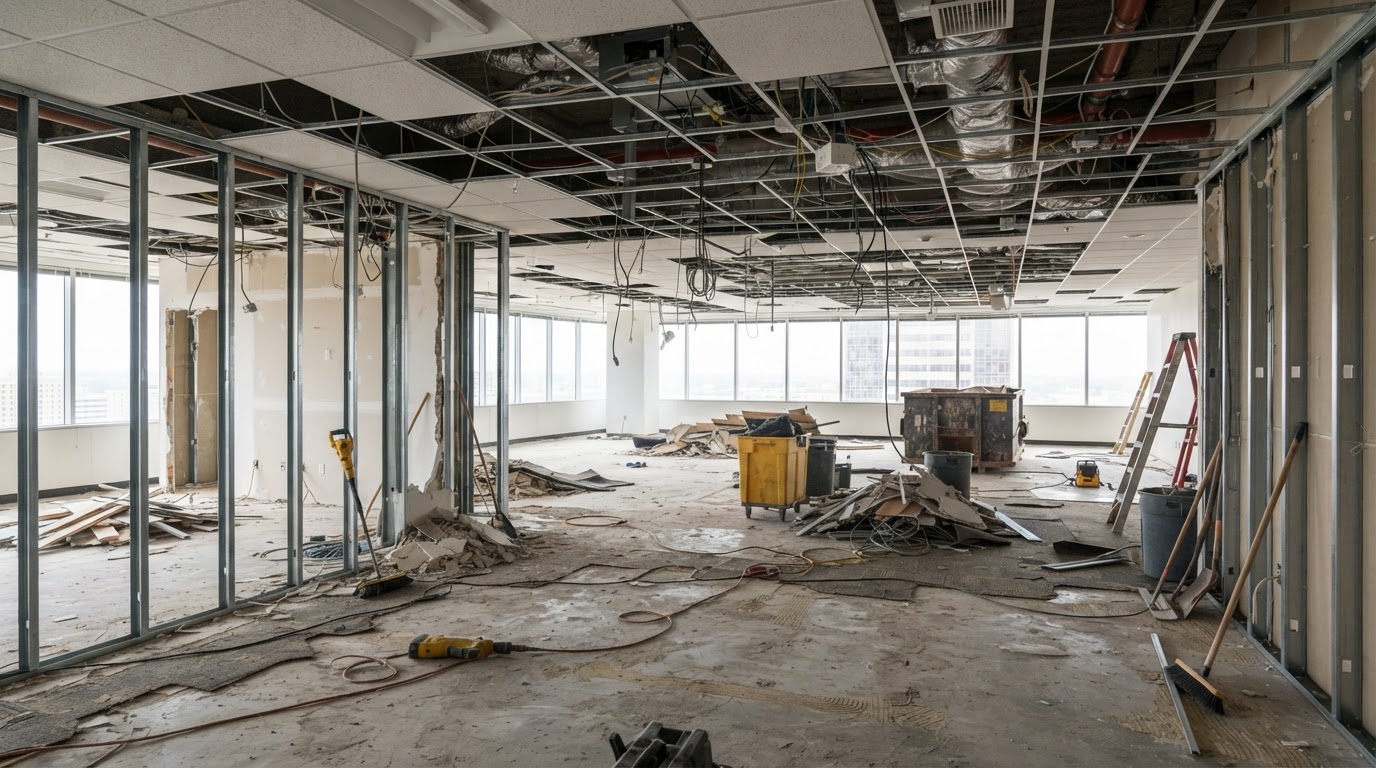
Commercial interior demolition covers selective tear-out of nonstructural components — office partitions, retail strip-outs, ceilings, flooring, fixtures, and finishes — to prepare a space for renovation or tenant improvements. This is different from structural building demolition. We don't claim engineering, licensed utility work, asbestos abatement, or fire system modifications without verified qualifications. These are the commercial interior demolition applications we take inquiries for.
Office Interior Tear-Outs
Selective demolition of office interiors — nonstructural partitions, dropped ceilings, and old finishes cleared for reconfiguration or renovation. Coordinated with the building's operations and tenant schedule.
Retail Space Strip-Outs
Interior strip-outs of retail spaces — display fixtures, built-in shelving, and finishes cleared for new tenants or remodels. Attached fixtures are different from free-standing furniture removal.
Nonstructural Partitions
Removal of nonstructural partition walls — stud walls, demising walls, and office dividers. Structural walls, load-bearing components, and structural building demolition are a separate scope.
Ceiling and Flooring Removal
Drop ceilings, ceiling tiles, carpet, VCT, and flooring materials removed during commercial interior renovations. Suspect asbestos or lead materials require qualified testing and abatement first.
Commercial Fixtures and Cabinets
Built-in cabinets, counters, and commercial fixtures removed during tenant improvements. Attached fixtures may involve demolition scope beyond free-standing furniture hauling.
Tenant Improvement Preparation
Interior demolition coordinated to prepare a space for tenant improvements — clearing the old layout so the new build-out can begin. Coordinated with the renovation contractor's timeline.
For related services, see our demolition services, interior demolition, and commercial dumpster rental pages.
Planning Commercial Interior Demolition Near Spring Hill
Commercial interior demolition starts with the scope — what's structural versus nonstructural, what utilities need disconnection, and what permits apply. We review the project drawings, the property authorization, the occupied-building concerns, and the contractor coordination so the tear-out can be planned correctly. Suspect asbestos or lead materials are flagged for qualified testing before any demolition.
Commercial Permits, Utilities & Demolition Estimate Factors
Commercial interior demolition involves structural versus nonstructural components, utility systems, fire protection, dust control, suspect hazardous materials, and permit requirements — all assessed up front. We don't claim engineering, licensed utility work, asbestos abatement, or fire system modifications without verified qualifications. Each factor is reviewed so the demolition plan matches the space.
Structural Versus Nonstructural Components
Selective interior demolition covers nonstructural components — partitions, ceilings, flooring, and fixtures. Structural walls, load-bearing components, and structural building demolition are a separate scope requiring engineering. We don't claim structural engineering or structural demolition without verified qualifications.
Electrical, Plumbing and HVAC Systems
Interior demolition near electrical, plumbing, or HVAC systems requires those utilities to be disconnected by licensed trades first. We don't perform licensed utility work. Confirm disconnections are complete before scheduling demolition. Share the utility status so the scope can be reviewed.
Fire Protection Systems
Commercial buildings have fire protection systems — sprinklers, alarms, and fire-rated assemblies. We don't modify fire protection systems. Those disconnections and modifications require licensed fire-protection contractors. Confirm the system status before scheduling demolition.
Dust and Operational Disruption
Interior demolition in occupied commercial buildings generates dust and disruption. Scheduling around tenant operations, business hours, and dust-control measures is considered in the plan. We don't promise guaranteed after-hours availability without confirmation. Share the building's operating constraints.
Suspect Asbestos or Lead Materials
Older commercial buildings may contain suspect asbestos or lead materials — in ceiling tiles, flooring, or coatings. We don't perform asbestos abatement or lead remediation. Suspect materials require qualified testing and abatement before demolition. Share the building's age and material conditions so the scope can be reviewed.
Permit and Inspection Requirements
Commercial interior demolition may require permits and inspections from the local jurisdiction. We don't claim to pull permits or perform inspections without verification. Permit status is confirmed with the property owner or contractor. Our dumpster permit guide covers placement-related permitting.
We don't claim engineering, licensed utility work, asbestos abatement, or fire system modifications without verified qualifications. Structural walls and load-bearing components are a separate scope. Electrical, plumbing, HVAC, and fire protection disconnections require licensed trades. Suspect hazardous materials require qualified testing and abatement before demolition.
Commercial Interior Demolition FAQs in Spring Hill
Request Commercial Interior Demolition in Spring Hill
Send the property type, project scope, dimensions, utility status, permit approvals, access conditions, and photographs. We'll review the scope and reply about availability and next steps. Prefer to talk it through? Call us directly.
Tell Us About Your Project
Describe what needs to be removed, delivered, or demolished. Include the project address, preferred timing, and photographs so the scope can be reviewed.
Prefer to discuss your project?
Call (352) 497-0202Related services: Demolition Services • Interior Demolition • Kitchen & Bathroom Tear-Out • Commercial Dumpster Rental • Construction Site Cleanup • Office & Retail Cleanouts • Restaurant Equipment Removal