
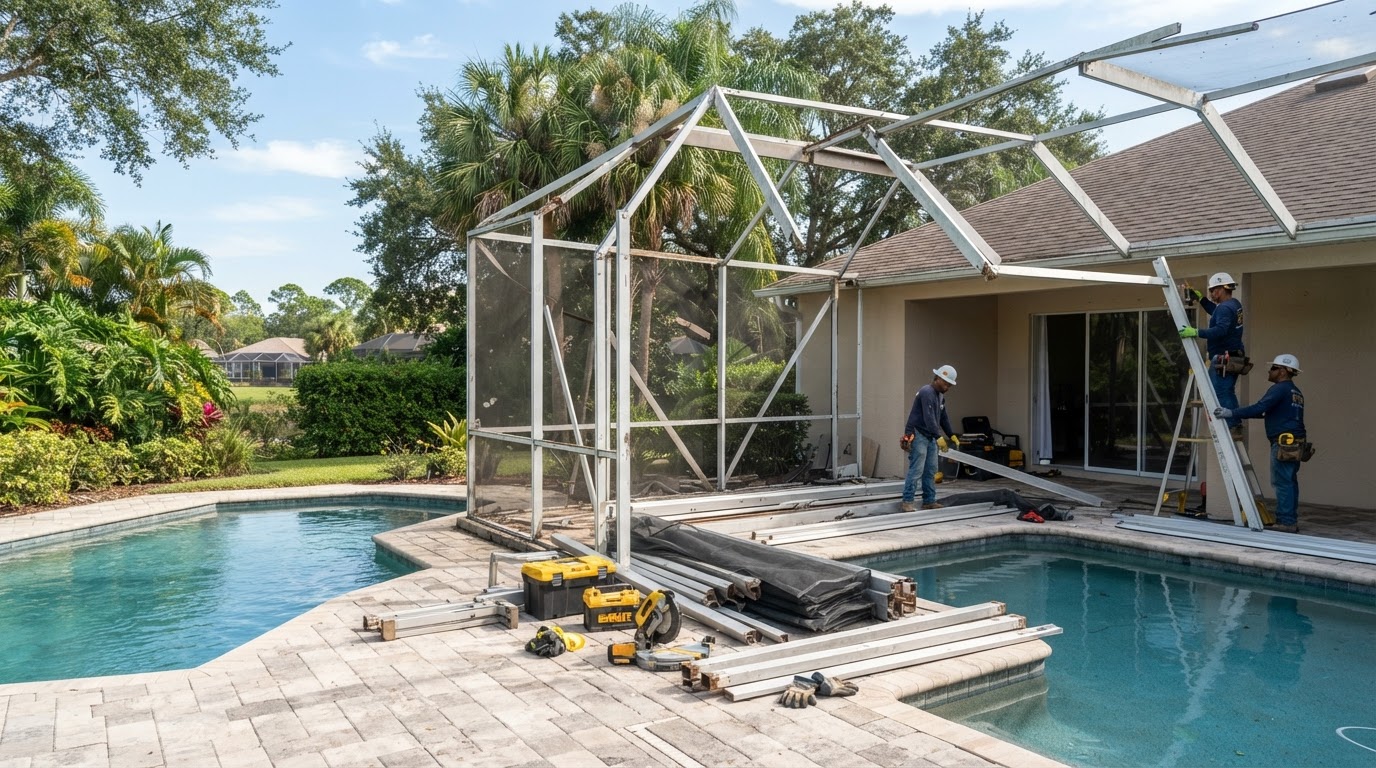
Pool Cage & Screen Enclosure Demolition Spring Hill
Removal inquiries for aging, damaged, or unwanted pool cages, screened lanais, and patio enclosures. Tell us the dimensions, whether it's attached to the home, and what's underneath — roof connections, electrical, and pool proximity all shape the scope. We don't promise damage-free removal, structural repairs, or screen enclosure rebuilding. Share the details and the right approach can be confirmed.
Request a Quick Estimate
Tell us the basics — we'll review the scope and reply about availability.
Pool Cage & Screen Enclosure Demolition in Spring Hill
Florida pool cages and screen enclosures take a beating from sun, salt, and storms. Aluminum framing corrodes, screens tear, and storm damage can leave an enclosure unsafe. Whether you're removing a deteriorated cage before a replacement, clearing a damaged structure, or opening up a lanai, the enclosure type and its attachments shape the removal. A freestanding patio screen is a different project from a pool cage tied into the house roof — identifying the structure up front lets us plan the right approach.
Aluminum Pool Cage Removal
Aluminum pool cage structures dismantled and hauled — framing, beams, fasteners, and screen mesh. The framing comes apart into manageable sections, and the aluminum may be segregated for recycling where accepted by the receiving facility.
Screened Lanai Demolition
Screened lanai enclosures removed down to the framing. Lanai structures attached to the home may involve structural connections, roof ties, or shared walls that require additional assessment before any removal proceeds.
Patio Screen Enclosure Removal
Freestanding or attached patio screen enclosures dismantled and hauled. Posts, anchors, and concrete footings are assessed separately — we don't promise footing removal without confirming it's part of the scope.
Storm-Damaged Enclosure Assessment
Wind-damaged, collapsed, or deteriorating screen enclosures. Don't assume a damaged aluminum structure is safe to approach — describe the condition and access so the removal is planned safely around what's actually there.
Enclosure Framing and Attached Components
Framing attached to the home, roof connections, gutters, lighting, ceiling fans, and other attached components all shape the removal scope. Attached elements may require coordination with other trades before the enclosure comes down.
Debris Hauling After Removal
Aluminum framing, screen mesh, fasteners, and any concrete anchors hauled away once the enclosure is down. The debris volume depends on the enclosure size and what's attached — describe what you have so the hauling is planned accurately.
Planning Screen Enclosure Removal Near Spring Hill
A pool cage or screen enclosure removal starts with the structure — its dimensions, whether it's freestanding or attached, and what's connected to it. Roof ties, electrical, pool proximity, and backyard access all shape the plan. Share those details up front so the scope is confirmed rather than discovered on site.
Pool Cage Attachments, Permits & Demolition Costs
Attachment type, electrical, pool proximity, access, and permits all shape a pool cage or screen enclosure removal. We don't promise damage-free removal, structural repairs, or screen enclosure rebuilding — where those apply, the scope is confirmed for your address and structure rather than assumed.
Freestanding vs. Attached Enclosures
A freestanding pool cage is a standalone removal — framing, screen, and posts. An enclosure attached to the home may share roof connections, gutters, or structural ties, and that can require additional assessment and coordination before any removal proceeds.
Roof and Wall Connections
Where the enclosure ties into the house roof or wall, the connection points shape the removal. Flashing, sealant, shared gutters, or structural anchors all need to be identified — we don't assume an attached enclosure comes down the same way a freestanding one does.
Electrical or Other Attached Systems
Some pool cages have lighting, ceiling fans, outlets, or low-voltage systems. We don't perform licensed electrical disconnection — safe isolation by an appropriately qualified electrician may need to happen first. Describe any electrical so we can plan around it.
Pool and Patio Protection Considerations
An enclosure sits over or beside a pool, patio, decking, or lanai surface. Falling aluminum, fasteners, and debris can damage what's underneath — describe the pool and surrounding surfaces so the removal is planned to protect them where possible.
Aluminum Framing Disposal
Aluminum framing may be segregated for recycling where the receiving facility accepts it. We don't guarantee recycling for every enclosure — the actual disposal route depends on material condition and facility acceptance. The framing is hauled regardless.
Site Access and Permit Requirements
Backyard access, gate width, and overhead clearance all shape how the enclosure comes apart and how debris reaches the truck. Structure classification and location may influence permitting — we don't promise permit-free demolition without verification for your address.
Don't assume a storm-damaged enclosure is safe to approach. Describe the condition and access so the removal is planned safely — and note that removing the cage doesn't remove the pool beneath it. If the inground pool itself is the project, that's a separate demolition scope.
Pool Cage Demolition FAQs in Spring Hill
Request Pool Cage Demolition in Spring Hill
Send the enclosure dimensions, the attachment type, any electrical connections, the pool and patio proximity, and the backyard access — plus your timing. We'll review the scope and reply about availability and next steps. Prefer to talk it through? Call us directly.
Tell Us About Your Project
Describe what needs to be removed, delivered, or demolished. Include the project address, preferred timing, and photographs so the scope can be reviewed.
Prefer to discuss your project?
Call (352) 497-0202Related services: Demolition Services • Deck & Fence Removal • Scrap Metal Removal