
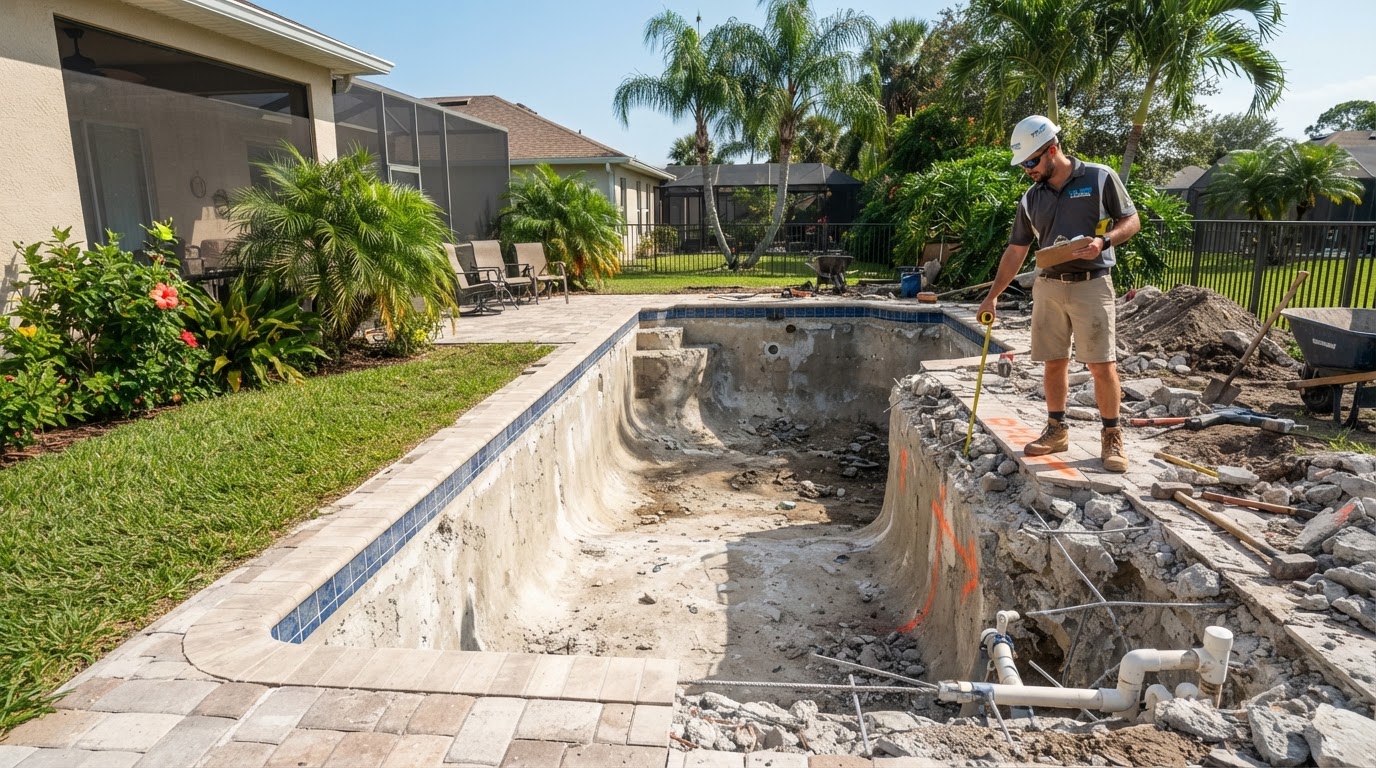
Inground Swimming Pool Removal Spring Hill
Inground pool removal is a specialized demolition project — pool construction type, regulatory requirements, equipment access, and site restoration all shape the scope. Tell us the pool type, dimensions, and what's connected. We don't claim engineered backfilling, compaction testing, or geotechnical assessment without confirmation. Share the details and the right approach can be confirmed.
Request a Quick Estimate
Tell us the basics — we'll review the scope and reply about availability.
Inground Swimming Pool Removal in Spring Hill
An unused, damaged, or high-maintenance inground pool becomes a liability — insurance, upkeep, and liability all add up. Removing one is a specialized demolition project, not a routine hauling job. The pool construction type, the removal method, the utility connections, the backyard access, and the site restoration all shape the scope. A concrete pool with a full deck in a fenced yard is a different project from a small fiberglass shell with open access. Identifying the pool and its surroundings up front lets us plan the right approach — and this is distinct from portable hot tub removal and pool cage demolition, which are separate scopes.
Concrete and Gunite Pools
Concrete and gunite pool shells demolished and hauled. These pools have steel reinforcement, thick walls, and substantial concrete — the construction type shapes the equipment, the breaking scope, and the debris volume.
Fiberglass Pool Shells
Fiberglass pool shells removed as a unit or in sections. Fiberglass construction is handled differently from concrete — the shell may come out differently depending on how it's set in the ground and what's around it.
Pool Deck and Coping Removal
Concrete or paver pool decking, coping, and surrounding hardscape removed with the pool or as a separate scope. The deck area adds to the debris volume and the site restoration scope — describe what surrounds the pool.
Full Pool Removal Considerations
Full removal means taking out the entire pool shell and backfilling the void. This is the most complete approach but involves the most debris, equipment, and site work — and may require engineered backfill, compaction, and inspections depending on the jurisdiction.
Partial Removal or Abandonment Assessment
Partial removal — sometimes called collapse-and-fill — involves removing the top portion and backfilling over the remaining shell. This is a different approach with different permitting, engineering, and future land-use considerations. We don't promise every method is available or locally permitted.
Backyard Restoration and Debris Planning
After the pool is out, the site needs backfill and restoration. Backfill material, compaction, grading, and future land use all shape the final scope. We don't claim engineered backfilling, compaction testing, or certified site restoration without confirmation.
Planning Swimming Pool Demolition Near Spring Hill
An inground pool removal starts with the pool — its construction type, dimensions, depth, and what's connected to it. Utilities, deck and enclosure attachments, backyard access, groundwater, and permits all shape the plan. Share those details up front so the scope is confirmed rather than discovered on site. We don't provide DIY draining or demolition instructions — this is a project that requires appropriate assessment and planning.
Pool Demolition Permits, Backfill & Estimate Factors
Construction type, removal method, utilities, access, groundwater, backfill, and permits all shape an inground pool removal. We don't claim engineered backfilling, compaction testing, geotechnical assessment, or certified site restoration without confirmation — where those apply, the scope is confirmed for your address and project rather than assumed.
Concrete vs. Fiberglass Construction
Concrete and gunite pools have steel reinforcement and thick walls — they're broken up and hauled as heavy debris. Fiberglass shells may come out as a unit or in sections. The construction type shapes the equipment, the breaking scope, and the debris volume. We don't assume every pool is handled the same way.
Full vs. Partial Removal
Full removal takes out the entire shell and backfills the void — the most complete but most involved approach. Partial removal removes the top portion and backfills over the remaining shell. Each has different permitting, engineering, and future land-use considerations. We don't promise every method is available or locally permitted.
Utility Isolation
Pool plumbing, electrical, gas heaters, and solar connections all need to be safely isolated before demolition. We don't perform licensed utility disconnection — safe isolation by appropriately qualified tradespeople may need to happen first. Describe what's connected so we can plan the removal around what needs to be isolated.
Excavation Access
Getting equipment to a backyard pool depends on gate width, side yards, overhead clearance, and ground conditions. Tight access changes what equipment can be used and how the debris gets out. Describe the access route with photos so the approach is confirmed up front.
Groundwater and Soil Conditions
Florida groundwater and soil conditions affect excavation, backfill, and drainage after removal. High water tables can complicate both the removal and the backfill. We don't claim geotechnical assessment or soil engineering without confirmation — where those apply, specialist assessment is arranged.
Fill Material and Compaction Requirements
Backfill material, compaction, and grading shape the site restoration after the pool is out. Some jurisdictions require engineered fill, compaction testing, or inspections before the area can be built on. We don't claim certified site restoration without confirmation — the actual requirements are verified for your address and project.
Inground pool removal is a specialized demolition project — not a routine hauling job. We don't provide DIY draining or demolition instructions, and we don't claim engineered backfilling, compaction testing, or geotechnical services without verified qualifications. Where specialist assessment is needed, that's identified so the right approach is confirmed for your pool and address.
Inground Pool Removal FAQs in Spring Hill
Request an Inground Pool Removal Assessment in Spring Hill
Send the pool construction type, approximate dimensions and depth, utility connections, deck and enclosure details, backyard access, and any known permit status — plus your timing and the intended future use of the area. We'll review the scope and reply about availability and next steps. Prefer to talk it through? Call us directly.
Tell Us About Your Project
Describe what needs to be removed, delivered, or demolished. Include the project address, preferred timing, and photographs so the scope can be reviewed.
Prefer to discuss your project?
Call (352) 497-0202Related services: Demolition Services • Concrete & Driveway Removal • Pool Cage & Screen Enclosure Demolition